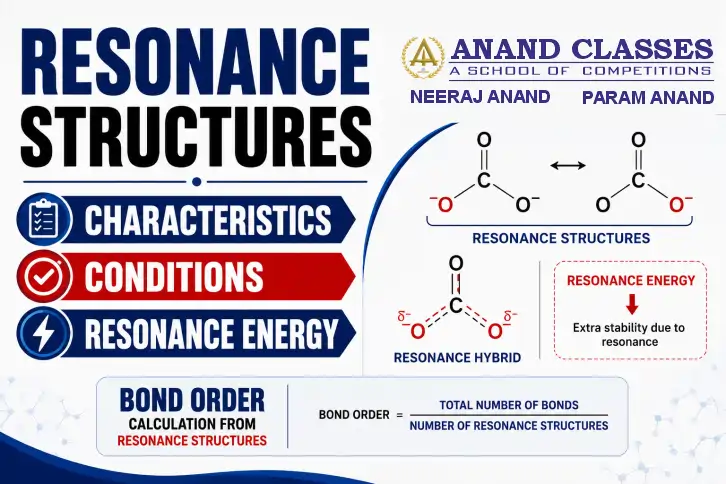
Resonance Structures: Characteristics, Conditions, Resonance Energy, and Bond Order Calculation is a comprehensive study resource written by Neeraj Anand of Anand Classes and published by Anand Technical Publishers. This chapter explains the fundamental concept of resonance in chemistry, including the characteristics and conditions required for resonance, canonical (resonating) structures, resonance hybrid, resonance energy, and the calculation of bond order from resonance structures. With clear explanations, solved examples, and exam-oriented concepts, this resource helps students develop a strong understanding of chemical bonding for CBSE Class 11, JEE Main, JEE Advanced, NEET, and other competitive examinations.